
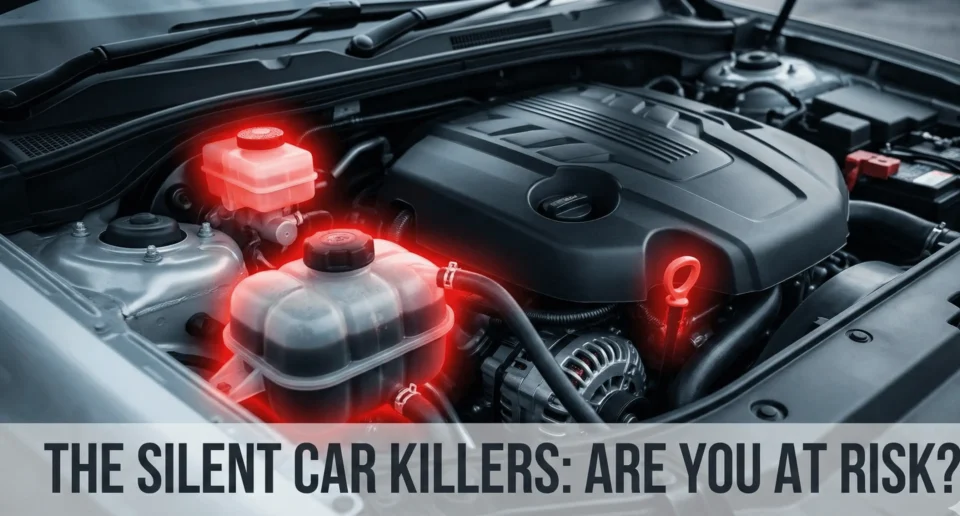
Let’s be honest: you probably think you take pretty good care of your car. You wash it when it gets dirty, you try to avoid massive potholes, and you (mostly) take it in for an oil change when the little sticker on your windshield tells you to.
You might think the biggest threat to your car’s lifespan is aggressive driving or road salt in the winter. But the truth is, the most common way drivers destroy their vehicles isn’t dramatic. It’s slow, silent, and completely preventable.
There is one innocent mistake—an oversight based on the “out of sight, out of mind” mentality—that is slowly killing your engine, transmission, and safety systems.
That mistake? Ignoring the vital fluids that aren’t motor oil.

More Than just “Oil and Gas”
We have been trained to obsess over engine oil. And rightly so—it’s essential. But a modern vehicle relies on a complex circulatory system of varied fluids to operate under extreme heat and pressure.
Also read – 10 weird but useful car cleaning hacks that will shock you
When you rely solely on quick-lube shops for your maintenance, they often focus only on the “loss leaders”—the cheap oil change—and neglect the harder-to-reach or less profitable checks.
The innocent mistake is assuming that because your car starts up fine today, everything under the hood is okay. Meanwhile, critical fluids are breaking down, turning acidic, or leaking away, setting the stage for catastrophic (and expensive) failure.
Here are three critical areas where this innocent neglect does the most damage.
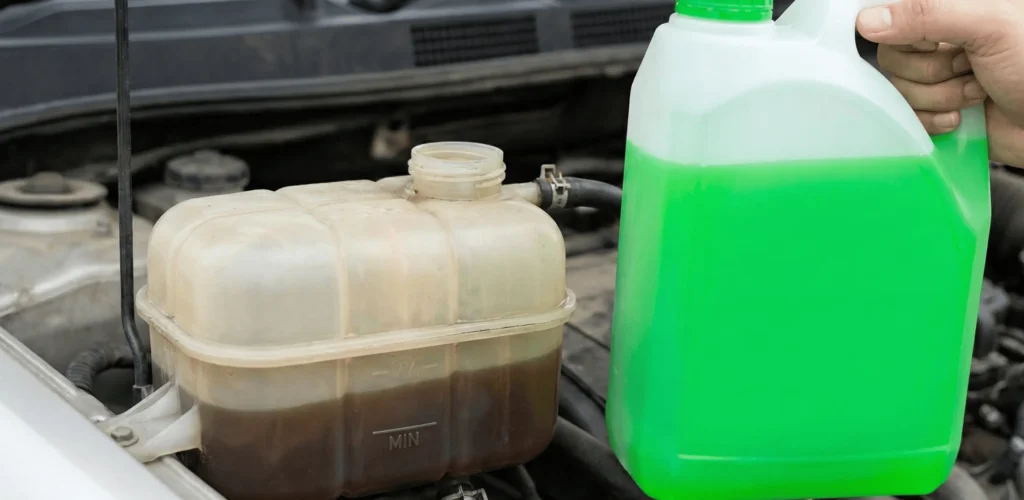
1.The Cooling System: A Ticking Heat Bomb
Your engine operates at incredibly high temperatures. Coolant (antifreeze) is the only thing stopping your engine block from warping itself into expensive scrap metal.
The Mistake: Many drivers assume coolant lasts forever. It doesn’t. Over time, the protective additives in the coolant break down. Old coolant can actually become electrically charged (electrolysis), eating away at your radiator and internal gaskets from the inside out.
The Destruction: Neglecting a simple coolant flush can lead to a blown head gasket, a cracked engine block, or a seized water pump. We are talking about thousands of dollars in repairs, all because a $50 fluid wasn’t changed every few years.
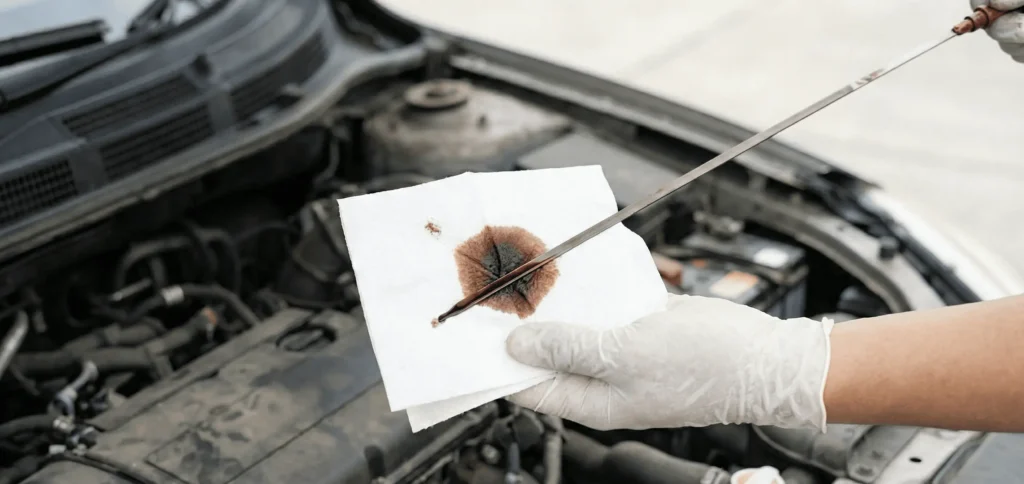
2.Transmission Fluid: The “Lifetime” Myth
The automatic transmission is perhaps the most complex and expensive component in your car besides the engine itself. It relies entirely on specialized hydraulic fluid to shift gears smoothly.
The Mistake: Buying into the myth of “lifetime transmission fluid.” Many manufacturers now claim their transmission units are “sealed for life.” Mechanics will tell you this is nonsense. “Lifetime” usually just means the lifetime of the warranty.
The Destruction: As transmission fluid ages, it loses its ability to manage friction and heat. If your car shudders when shifting, hesitates when you hit the gas, or slips out of gear, damage has already begun. Ignoring this fluid turns a few hundred dollars in maintenance into a $4,000 transmission replacement.
3.Brake Fluid: The Silent Safety Hazard
This is the most dangerous oversight of all. Your brakes work via hydraulic pressure. When you press the pedal, fluid pushes the pads against the rotors.
The Mistake: Forgetting that brake fluid is “hygroscopic.” This means it actively absorbs moisture from the air over time.
The Destruction: Water in your brake lines is disastrous. Under heavy braking (like an emergency stop on the highway), the heat generated by your brakes can boil that trapped water. When fluid boils, it turns to gas, and your brake pedal will go straight to the floor with zero stopping power. If your brake fluid looks like dark maple syrup instead of clear, pale oil, you are driving a safety hazard.
The Simple Fix: Pop the Hood
This mistake is “innocent” because modern cars hide their engines under massive plastic covers, making maintenance seem intimidating.
But you don’t need to be a mechanic to stop this slow-motion destruction.
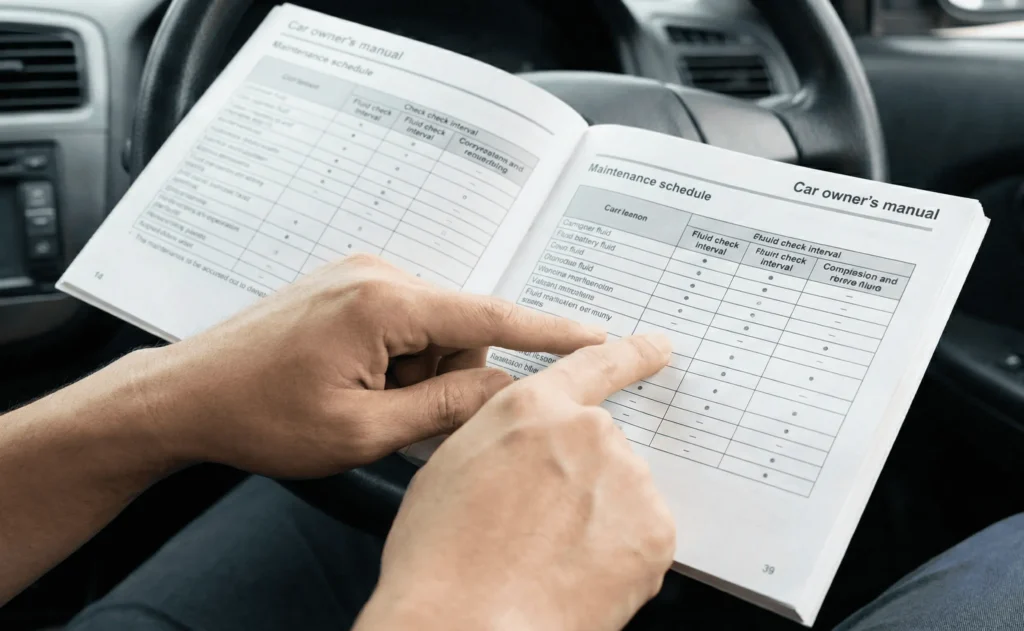
Start by opening your glovebox and finding the owner’s service manual. Look at the maintenance schedule—not just for oil, but for everything. Note the recommended intervals for coolant flushes, transmission services, and brake fluid exchanges.
Once a month, pop the hood. Most modern cars have translucent reservoirs for these fluids with clear “MIN” and “MAX” lines. You don’t need tools to check them; you just need eyes.
Stop waiting for a warning light on your dashboard. By the time the light comes on, the damage is often already done. A little proactive attention to the fluids you usually ignore is the difference between a car that hits 200,000 miles and one that ends up in the junkyard prematurely.